 Deutsch
 English
 Türkçe
Did Jeff Bezos Get a Hair Transplant? What We Know So Far
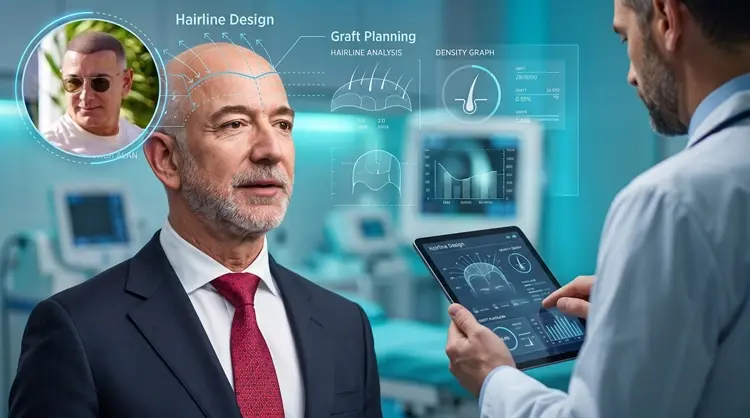
When one of the world's most recognizable billionaires undergoes a physical transformation, public curiosity naturally follows. In recent years, observant fans have debated his evolving appearance, inevitably leading to a common question: did Jeff Bezos get a hair transplant? While he is famous for embracing a fully shaved head for much of his career, any subtle changes in his overall look immediately spark discussions about cosmetic procedures. Analyzing celebrity hair transplants offers a fascinating glimpse into modern restoration techniques. Rather than confirming rumors about the tech mogul’s private decisions, looking at how advanced hair loss is treated today helps clarify what is actually possible for individuals seeking a similar revitalization. Let us explore the reality behind high-profile hair restoration.
Key Takeaways
- Jeff Bezos has maintained a signature shaved head for years, and there is no confirmed public record of him undergoing a hair transplant.
- Advanced hair loss requires comprehensive restoration strategies, often involving high graft counts from a healthy donor area.
- Modern techniques like FUE and DHI provide natural-looking results for those who choose to restore their hairline.
- Celebrity transformations often involve a combination of surgical and non-surgical aesthetic enhancements over time.
What is publicly visible regarding the Jeff Bezos hair transformation?
There is currently no concrete evidence or visible public confirmation that Jeff Bezos has undergone surgical hair restoration. His highly publicized physical transformation in recent years has primarily centered around changes in his physique and fashion choices, rather than a sudden reappearance of hair.
- The signature look: For decades, the Amazon founder has embraced a smooth, shaved head, which is a practical and widely respected aesthetic choice for individuals experiencing advanced male pattern baldness.
- Public speculation: When public figures step into a new era of their lives—such as his highly visible relationship with Lauren Sanchez—audiences frequently search for terms like "jeff bezos new look" and "jeff bezos before and after," expecting comprehensive cosmetic changes.
- Who is not a candidate: It is important to note that individuals who have extensive hair loss and lack sufficient density in the donor area (the back and sides of the head) may not be suitable candidates for full-coverage hair restoration.
If you are exploring options for your own hair restoration, a professional medical evaluation can clarify your specific possibilities.
Free online consultation
Get a personalized hair transplant plan
Send clear photos of your hairline, crown and donor area for a free online consultation. You receive a preliminary assessment of your likely graft range and technique. The final plan is confirmed after your in-person examination and Hair Matrix analysis in Istanbul.
Photo evaluation before arrival · Accommodation and transfers arranged · Aftercare instructions provided
Which techniques are typically used for celebrity hair transplants?
When high-profile individuals choose to restore a receding hairline or thinning crown, they typically opt for minimally invasive techniques that offer precise control over the final design. These advanced methods leave minimal scarring and allow for a relatively discreet recovery period.
1. Follicular Unit Extraction (FUE)
FUE involves extracting individual hair follicles from the donor area using a micro-punch tool and implanting them into the thinning regions. It is highly favored by individuals in the public eye because it avoids the linear scar associated with older strip methods. This technique is well-suited for patients needing a large number of grafts for extensive coverage. One limitation is that the process can be time-consuming, sometimes requiring multiple sessions for very large areas.
2. Direct Hair Implantation (DHI)
DHI is a specialized variation of FUE where extracted follicles are loaded into a pen-like tool (often referred to as a Choi Implanter Pen) and implanted directly into the scalp without pre-making incisions. This allows the surgeon exact control over the depth, angle, and direction of each hair, creating a highly natural-looking hairline. It is ideal for increasing density in targeted areas. However, DHI is typically more labor-intensive and may not be the primary choice for mega-sessions requiring maximum graft counts.
What to expect: recovery and timeline for high-profile restorations
A major reason celebrities often hide from the public eye for a few weeks after a procedure is the visible recovery process. Hair restoration requires patience, and the results do not appear overnight. Here is a general timeline of what patients typically experience.
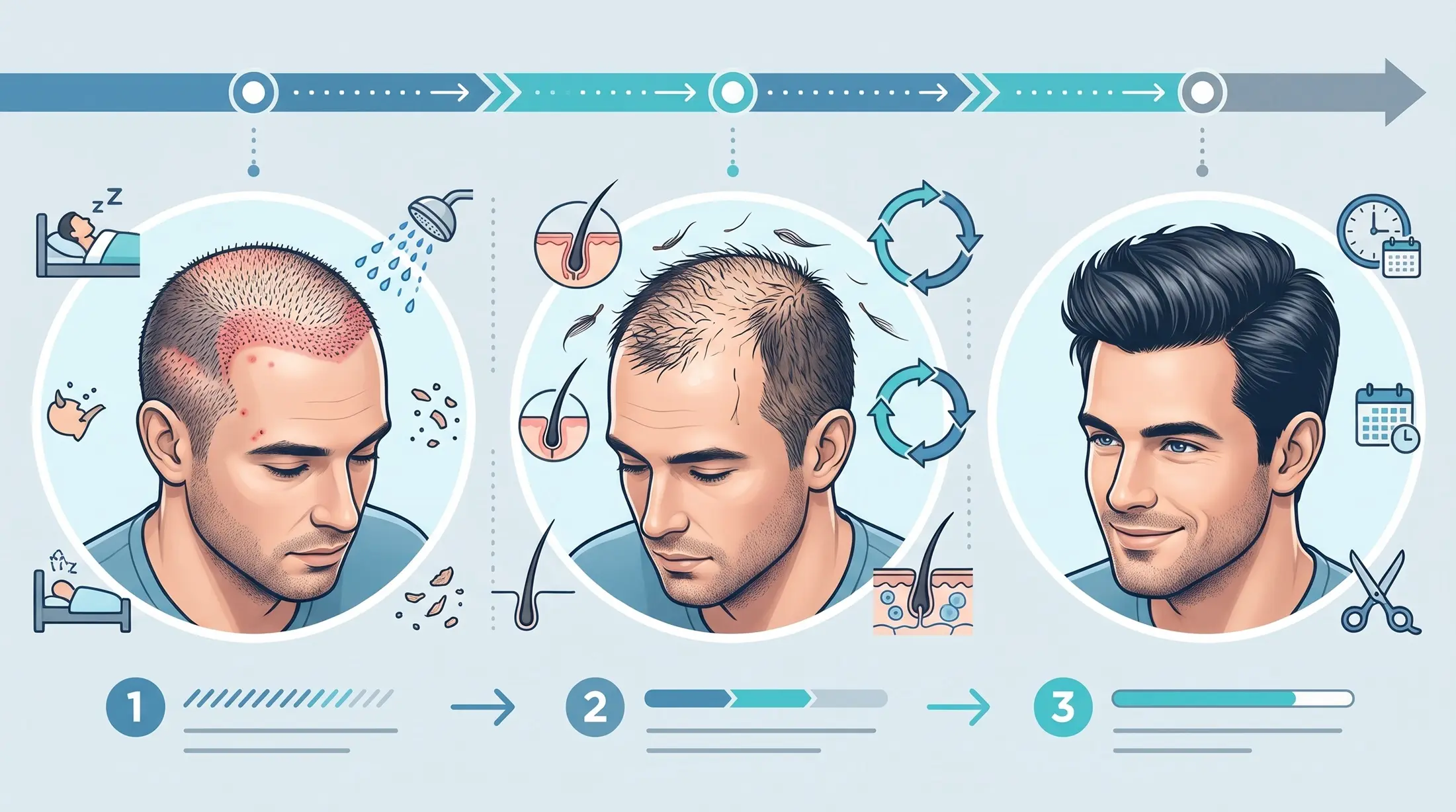
1. The first two weeks: initial healing
During the first few days, the scalp will exhibit minor redness, swelling, and small scabs around the implanted grafts. Patients are usually advised to sleep in a semi-upright position to minimize swelling and protect the newly placed follicles. The initial wash typically happens at the clinic. By the end of the second week, most of the scabbing naturally flakes off, leaving a much cleaner appearance.
2. Weeks three to eight: the shedding phase
Patients often experience "shock loss," a completely normal phase where the newly transplanted hairs shed. This can be alarming, but it is a standard part of the follicle's life cycle as it prepares to grow new, permanent hair. During this time, the scalp may look very similar to how it did before the procedure. If unusual pain, prolonged redness, or signs of infection occur during the first few months, patients should contact their doctor immediately.
3. Months three to twelve: visible growth
New hair typically begins to emerge around the third or fourth month, initially appearing fine and thin. Between months six and eight, the hair thickens and the coverage becomes noticeably denser. Final, mature results are usually visible around the 12-to-18-month mark, at which point the hair can be cut and styled normally.
Golden rules for choosing the right clinic
Whether you are a public figure or a private individual, selecting the right medical team is the most critical step in achieving a natural, safe outcome. Consider these essential factors before making a decision.
- Transparency and accreditation: Ensure the facility operates under strict medical standards. Reputable clinics are transparent about their licenses and the exact qualifications of their medical staff.
- Who actually performs the treatment: Clarify whether the consultation and procedure are conducted by a dedicated clinic or simply brokered by an agency. Knowing your medical team in advance provides peace of mind.
- Doctor experience: Hair restoration is a blend of medical science and aesthetic artistry. Look for a team with years of focused experience specifically in hair transplantation.
- Documented case examples: A trustworthy clinic will be able to show a comprehensive portfolio of diverse cases, demonstrating their ability to handle different hair types and stages of hair loss naturally.
- Realistic time planning: Ethical providers will give you an honest assessment of what can be achieved in a single session versus what might require a phased approach.
Questions to ask your clinic before you book
Preparing a checklist of questions ensures that you have all the necessary information to make a confident, informed decision regarding your treatment.
- Am I a suitable candidate based on my donor area density and hair loss pattern?
- Which extraction and implantation techniques do you recommend for my specific case?
- How many grafts are safely extractable without overharvesting the back of my head?
- What does the standard aftercare package include, and how long should I stay in the city?
- What is your protocol if the initial grafts do not yield the expected density?
- Will you provide a detailed timeline for the recovery phases?
- Can you explain the exact breakdown of the package factors to avoid any hidden costs?
Post-treatment and the Celyxmed approach
At Celyxmed in Istanbul, hair restoration is approached as a long-term medical commitment rather than a high-volume volume transaction. Every patient receives a personalized evaluation that begins with a detailed in-clinic Hair Matrix analysis, documenting native density, hair thickness, and growth trajectories to establish objective baseline data. Rather than applying a standard template, medical teams design custom strategies that safeguard the permanent donor reserve, ensuring that the back and sides of the head retain a natural, full appearance. Integrated supportive protocols, including specialized medical care and quality-certified complementary therapies, support optimal healing and tissue recovery at every stage of the process.
Free online consultation
Get a personalized hair transplant plan
Send clear photos of your hairline, crown and donor area for a free online consultation. You receive a preliminary assessment of your likely graft range and technique. The final plan is confirmed after your in-person examination and Hair Matrix analysis in Istanbul.
Photo evaluation before arrival · Accommodation and transfers arranged · Aftercare instructions provided
Frequently Asked Questions
Did Jeff Bezos get hair plugs?
Older techniques commonly referred to as "hair plugs" are largely obsolete today. There is no evidence that Jeff Bezos received them. Modern celebrity hair transplants utilize advanced FUE or DHI methods, which implant individual follicles rather than large groupings, ensuring a seamless, natural appearance without the artificial "plug" look.
Can someone with a fully shaved head get a hair transplant?
Yes, provided they still have a healthy, dense donor area at the back and sides of the scalp. If the donor area is severely depleted (common in very advanced Norwood stages), surgical restoration may not be possible. A detailed medical examination determines candidacy.
How long does it take for a celebrity hair transplant to look natural?
While the initial scabbing heals within two weeks, the transplanted hair usually sheds before regrowing. Visible, natural-looking growth typically begins around month four, with substantial density apparent by month eight. Full maturation of the results generally takes 12 to 18 months.
What is the difference between FUE and DHI?
Both methods extract follicles individually to avoid linear scarring. FUE involves making tiny incisions in the recipient area before implanting the grafts, which is efficient for large areas. DHI uses a specialized pen to implant the follicle directly without prior incisions, offering precise control over the hair's angle and density.
Are you curious to find out if your hair loss pattern makes you a strong candidate for modern restoration techniques?
The information provided in this article is for educational purposes only and does not constitute medical advice; individual candidacy and results vary significantly.