
 Deutsch
 English
 Türkçe

Hair Transplant in Turkey Reviews: How to Evaluate Real Patient Experiences?
Every year, thousands of people experiencing hair loss begin their journey by reading previous patient experiences to find permanent and natural results. Countless hair transplant in Turkey reviews on digital platforms have become one of the most important guides in this decision-making process. However, amid the vast amount of online information, distinguishing which experiences reflect reality and which contain exaggerated expectations is not always easy. A genuine hair transplant journey is not just about the surgery day; it covers a recovery period lasting many months that requires patience. In this guide, we examine in detail the critical points to consider when reading patient reviews, the realistic post-operative processes, and the essential factors that will guide you in choosing the right clinic.
Key Takeaways
- Realistic hair transplant reviews do not promise instant results; they emphasize that you should wait 12 to 18 months to see the final outcome.
- Reviews containing claims such as "completely painless" or "100% guaranteed" should be questioned, as they do not align with medical reality.
- A successful operation is measured not only by the number of grafted follicles but also by preserving the donor area and designing a natural hairline.
- When choosing a clinic, attention should be paid not only to reviews but also to institutional certifications and the transparency of the medical team.
The 3 main patient expectations highlighted in hair transplant reviews
On platforms where individuals who have had a hair transplant share their experiences, there are common themes that determine the success of the operation. The topics that candidates focus on and frequently look for in reviews are:
- Natural appearance (Front hairline): Placing the grafted hair at an angle suitable for the patient’s facial features and age without creating an artificial "plugged" look is the greatest source of satisfaction.
- Preservation of the donor area: The absence of permanent scarring or over-harvested thinning in the back of the head (occipital region) is the clearest indicator of successful planning.
- Post-operative support: The clinic’s guidance and medical support during the first wash, scab shedding, and shock loss phases directly affect patient confidence.
Individuals with active skin or scalp diseases, insufficient hair follicles in the donor area, or those during pregnancy/lactation are not considered suitable candidates until they complete their medical treatments.
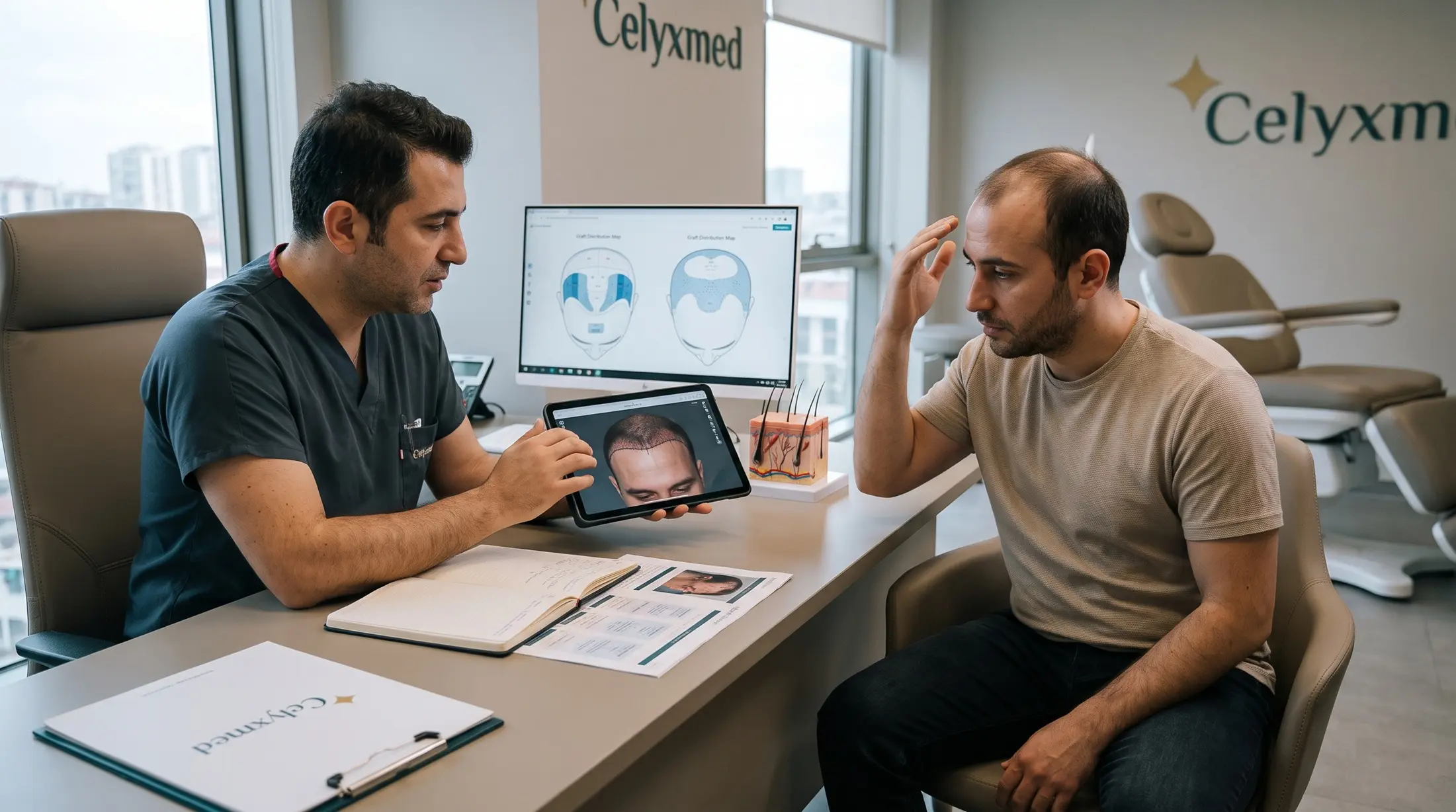
What should you consider when reading hair transplant reviews online?
While patient experiences are a valuable source of information, filtering reviews through a medical lens helps you form realistic expectations. Here are the red flags to watch out for:
1. Exaggerated claims on graft numbers
You may come across statements like "7,000 - 8,000 grafts were transplanted in a single session" in some reviews. In medical standards, the number of grafts that can be safely harvested without destroying the donor area is usually well below a certain safe limit, depending on the person's anatomy. Excessive harvesting, sometimes called "mega-sessions," can cause permanent baldness (necrosis) in the back of the head.
2. Statements contrary to medical reality
No surgical intervention carries a "zero risk" or "absolute success" guarantee. Even though FUE or DHI techniques are minimally invasive, having mild swelling, scabbing, and a stinging sensation in the first days is entirely natural. Exaggerated reviews that ignore these medical facts should be approached with caution.
3. Incomplete information about the process (Shock loss)
A genuine patient experience usually mentions the "shock loss" phase occurring between the 1st and 3rd months. Reviews that categorize this temporary shedding—where the transplanted hair falls out before growing back permanently—as a "failure" may not reflect the natural process.
To learn about the most suitable treatment options for your hair loss type, you can fill out our online evaluation form.
Price and quality balance: Which criteria are important when deciding?
Hair transplant costs can vary from clinic to clinic. However, focusing solely on the price when entrusting your health to an institution can lead to long-term issues. Understanding the factors that influence the cost can guide your decision.
| Factor | Impact on Quality and Process | Questions to Ask the Clinic |
|---|---|---|
| Technique Applied (FUE / DHI) | The complexity of the technique, the specialized medical tools used (Choi pen, sapphire tips) alter the operation time and planning. | Which technique is medically more suitable for my hair loss pattern? |
| Surgeon and Team Experience | An experienced team maximizes graft survival, ensuring follicles are transferred without losing their viability. | What is the experience of the medical team performing the operation? |
| Institutional Accreditations | Clinic environments approved by the Ministry of Health and possessing international standards minimize infection risks. | What official authorizations and quality certificates does your clinic hold? |
Note: The exact number of grafts and processing steps will only become final after a detailed hair analysis by specialists.
Golden rules for choosing the right clinic
To choose the most reliable institution among hundreds of options online, consider the following golden rules:
- Transparency and corporate identity: The clinic's open address, official certificates (ISO, etc.), and the medical CVs of its doctors should be clearly available on their website.
- Medical realism: Prefer institutions that offer natural planning suitable for your donor capacity and facial features, rather than those promising the maximum number of grafts under any circumstances.
- Real case examples: Examine the consistency and hairline naturalness in the before / after images of operations previously performed by the clinic.
- Operation environment: Ensure that the procedure is performed in a sterile clinic or hospital environment with emergency response facilities.
- Continuous communication: Confirm whether you will have access to medical support after you return home or to your country during the recovery phase.
Questions to ask your clinic before deciding
Before making your final decision on your healthcare journey, asking your clinic these questions can ensure your safety:
- Who will plan my operation and design my front hairline?
- Where will pre-operative medical checks and blood tests be conducted?
- Does the clinic have a fully equipped emergency response room in case of unforeseen circumstances?
- What anesthesia method is used, and how is the process managed?
- What follow-up protocol do you implement during the recovery process (first wash, scab shedding)?
- What is the maximum number of grafts that can be safely harvested from my donor area?
The recovery process and the Celyxmed approach
Located in Ataşehir, Istanbul, Celyxmed provides services at international standards with an expert team having over 15 years of experience in hair transplantation. With more than 10,000 treatment experiences to date, we closely monitor not only the surgery day but also the subsequent 1-year recovery journey of our patients. Adhering to medical ethics, we determine the most appropriate number of grafts for each patient’s biological capacity and design natural-looking front hairlines. Before arriving at our clinic, our patients can receive transparent information about their treatment processes through our photographic preliminary evaluation.
To learn about the customized medical planning for your hair loss, you can contact our expert team immediately.
Frequently Asked Questions
When can you return to normal life after a hair transplant?
A few days of rest are recommended after the operation. Usually, you can return to desk work after the 3rd or 4th day. Once scab shedding is completed within the first 10-14 days, the procedure is not noticeably visible from the outside.
Does transplanted hair grow immediately?
No, the hair in the grafted follicles sheds during the "shock loss" phase between the 1st and 3rd months. New and permanent hair starts to grow from the 4th month onwards. Seeing the full and final result usually takes 12 to 18 months.
Is there any pain or discomfort during the procedure?
Local anesthesia is applied to the scalp before the operation. Although a slight sting may be felt during the anesthesia injections, no pain or discomfort is felt during the rest of the operation as the area becomes completely numb.
Can someone else's hair follicles be transplanted into me?
No, a hair transplant is a tissue graft. To prevent the body from rejecting foreign tissue, only the person's own (autologous) hair follicles or body hair can be used.
A hair transplant is a reliable medical process that restores confidence when approached with correct planning and realistic expectations. What is the most critical criterion for you in your hair transplant research?
The information in this article is for informational purposes only and does not substitute for professional medical advice. Hair transplant suitability and treatment plans may vary based on the patient's anatomy and health history.