 Deutsch
 English
 Türkçe
Zirconia Crown Lifespan: How Long Do They Last and 7 Habits to Extend It
Metal-free restorations, preferred for restoring a natural tooth appearance and addressing aesthetic concerns, offer a long-term solution thanks to the high durability of the material. However, one of the most common questions patients have is about the zirconia crown lifespan and what factors affect it. Thanks to its biocompatibility, this material integrates perfectly with the gums and can maintain its original form for years when proper care procedures are followed. No matter how robustly they are manufactured in a laboratory setting, the durability of crowns in your mouth depends directly on your daily routines and oral hygiene. Let us explore the essential care habits you can incorporate into your daily life to maximize the lifespan of your crowns and prevent issues such as chipping or gum recession.
Key Takeaways
- With proper care and routine dental check-ups, zirconia crowns can typically maintain their form for 10 to 15 years or even longer.
- Using a night guard and avoiding hard foods are the most effective ways to prevent micro-cracks in your crowns.
- Abrasive (whitening) toothpastes can scratch the smooth surface of zirconia, making it more prone to plaque accumulation.
- While the crown itself cannot decay, the cleanliness of the underlying natural tooth structure and the gum line directly determines the longevity of the treatment.
What is a zirconia crown and when is it preferred?
Zirconia (zirconium dioxide) is a naturally occurring, highly resistant ceramic used in dentistry as a white, metal-free base material. Thanks to its light transmittance, it mimics natural tooth enamel and does not create a gray reflection at the gum line.
- Aesthetic restorations: Used for crowning severely discolored teeth that do not respond to whitening treatments.
- Teeth with structural loss: Provides structural support for teeth that have become fragile due to extensive decay or root canal treatments.
- Spaced teeth (diastema): Helps close minor misalignments and gaps when orthodontic treatment is not the preferred route.
- Individuals with metal allergies: Because it contains no metal alloys, its biocompatibility is extremely high and it does not trigger allergic reactions in the gums.
Patients with advanced, untreated gum disease (periodontitis) are not suitable candidates for zirconia crowns until the infection is brought under control.
To find out if your dental and jaw structure is suitable for zirconia treatment, you can fill out our online preliminary evaluation form and contact our specialists.
How to extend zirconia crown lifespan? 7 critical habits
Zirconia is engineered to withstand the strongest chewing forces in the human body. However, for this biomechanical system to function flawlessly for many years, patients must adapt their daily habits to this new condition. Here are seven fundamental habits that directly affect the lifespan of your dental crowns.
1. Meticulous hygiene along the gum line
Although the surface of the crown is resistant to plaque, the gum line where the zirconia meets the natural tooth is a sensitive area for bacteria. Brushing your teeth twice a day with a soft-bristled brush and using dental floss or interdental brushes, especially around the edges of the crown, is essential. Plaque accumulation in this area can lead to gum recession and decay of the underlying natural tooth, resulting in premature loss of the crown.
2. Using a night guard for bruxism (teeth grinding)
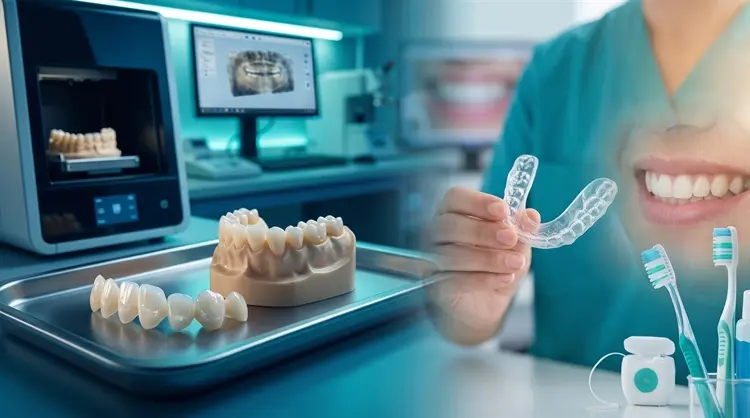
Involuntarily clenching or grinding your teeth during sleep places an immense load on your jaw joints and teeth. Since zirconia is a very hard material, constant friction can wear down opposing natural teeth or cause micro-cracks within its own framework. Custom-made clear night guards, prepared by taking your dental impressions, absorb this destructive force and protect your restorations.
3. Being careful with hard-shelled and sticky foods
Although zirconia is durable, it is susceptible to pinpoint trauma, much like natural teeth. Using your teeth to crack nuts, ice, or hard candies can cause the porcelain layering on the crown to chip. Similarly, excessively sticky caramels or gummy foods can gradually weaken the cement holding the crown in place.
4. Avoiding abrasive (aggressive) toothpastes
Toothpastes marketed as "extra whitening" or "stain-removing" often contain coarse-grained silica or baking soda, which can scratch the special glaze on the zirconia. A dulled surface begins to harbor tea and coffee stains more easily. Standard or sensitive toothpastes with fluoride and low abrasiveness (low RDA value) should be chosen for zirconia crowns.
5. Regular dental check-ups and professional cleaning
Your crowns might develop microscopic wear, cement micro-leakages, or early-stage gingivitis that you may not notice. Routine dental visits every six months ensure these issues are detected before they escalate. Furthermore, professional scaling performed by a dentist protects the health of the tissues surrounding the crown, extending its life.
6. Breaking bad oral habits
Using your teeth as tools poses a significant risk to your restorations. Opening packages, snapping threads, biting pens, or chronically biting your nails applies uneven shearing forces to the biting edges of the teeth. These lateral forces can cause the zirconia to detach from the bonded surface or result in edge fractures.
7. Using a mouthguard during sports activities
If you are involved in contact sports with a high risk of trauma, such as basketball, football, martial arts, or mountain biking, wearing a custom-made mouthguard is vital. A sudden external impact can not only break the crown but also damage the underlying natural tooth root.
Zirconia crown costs and factors affecting the price
When deciding on zirconia treatment, the quality of the blocks used and the craftsmanship details shape the total treatment budget. If you are aiming for a long-lasting restoration, understanding the factors behind the costs makes it easier to make the right choice.
| Factor | Impact on Price and Process | What to Ask the Clinic |
|---|---|---|
| Zirconia Block Quality | Monolithic zirconia blocks meeting international standards offer higher fracture resistance and better aesthetics. | Does the zirconia brand used have an international certification? |
| Laboratory and CAD/CAM Technology | Digital impressions and 3D design systems reduce the margin of error to near zero but affect laboratory costs. | Will my impressions be taken with a digital scanner or traditional putty? |
| Framework and Aesthetic Layering | Extra porcelain layering applied to anterior (front) teeth enhances aesthetics but increases technician time. | Will a special glazing process be applied for a natural translucency on my front teeth? |
| Additional Treatment Requirements | Needing root canal treatment or gum contouring before crowning changes the overall planning. | Do my gums require any treatment before the crowns are placed? |
Note: The number of crowns to be applied, the design method to be used, and the final treatment plan will only become clear after a detailed clinical and radiographic examination by your dentist.
When should you see a doctor after getting crowns?
It is considered normal to experience slight hot-cold sensitivity for the first few days after zirconia crowns are fitted. However, to avoid risking the lifespan of your crown, you should pay attention to certain warning signs. If the crown feels abnormally high when you bite down (premature contact), if dental floss constantly catches or breaks in a specific spot, or if there is bleeding, swelling, or a bad odor in the gum around the crown, you should book an appointment with your dentist without delay. Such situations can often be resolved with a simple polishing procedure or the removal of excess cement.
The treatment process and the Celyxmed approach
Located in Ataşehir, Istanbul, Celyxmed provides services at international quality standards with an expert team in the field of oral and dental health. During the zirconia crown process, digital impressions of our patients are taken, and restorations with micron-level precision are designed using CAD/CAM systems. With years of clinical experience, we produce crowns that are not only aesthetically pleasing but also biologically fully compatible with the gums. At the end of the treatment, we provide our patients with detailed guidelines regarding zirconia crown maintenance and long-term habits.
To take a step towards a healthy and aesthetic smile, and to get detailed information about zirconia treatment, you can fill out our online evaluation form today.
Frequently Asked Questions
How many years do zirconia teeth last?
Provided that regular brushing, flossing, and six-month dental check-ups are maintained, zirconia crowns generally last between 10 and 15 years, and can remain problem-free for much longer with excellent care.
Can a zirconia crown break?
Zirconia is one of the hardest materials in dentistry and is highly resistant to normal chewing forces. However, chewing ice, cracking walnut shells, or suffering severe facial trauma can cause the crown to get damaged.
Will my own tooth decay under the crown?
The zirconia material itself cannot decay. However, if plaque accumulates at the gum line, bacteria can seep under the crown and decay the natural tooth structure. Therefore, cleaning the margins at the gum line is extremely important.
Does zirconia turn yellow or change color over time?
Thanks to its smooth and glazed surface, zirconia crowns do not change color due to factors like tea, coffee, or smoking. However, tartar or plaque accumulating on the surface can cause a yellowish appearance; this can easily be removed with professional cleaning.
Is chewing gum harmful with dental crowns?
Because crowns are secured to the tooth with special medical cements, chewing gum under normal circumstances will not dislodge the crown. However, the continuous consumption of very hard or excessively sticky foods may weaken the cement over time.
When supported by the right habits, zirconia crowns are an excellent investment that preserves their aesthetic and functional life for years. Which habit in your daily oral care routine do you think will extend the life of your crowns the most?
The information provided in this article is for educational purposes only and does not replace professional medical advice. Treatment options and crown lifespans may vary based on the patient's biological anatomy.