 Deutsch
 English
 Türkçe
How to Maintain Your Dental Implants for a Lifetime: Expert Tips
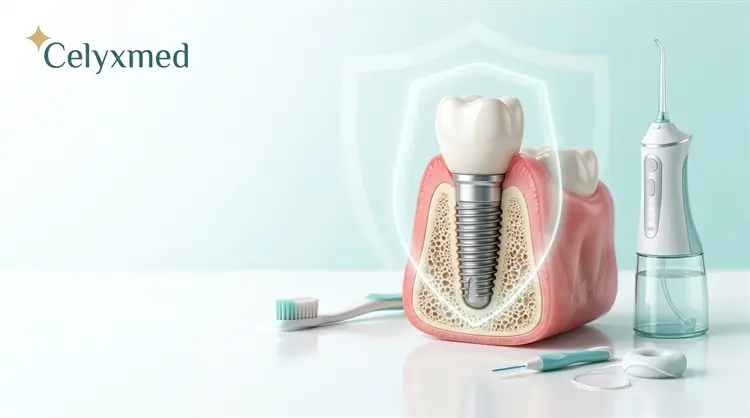
Investing in your smile is a major decision, and once your new teeth are in place, your focus naturally shifts to protecting them. Many patients assume that because artificial teeth cannot get cavities, they do not require much attention. This is a common and dangerous misconception. The artificial crown may be impervious to decay, but the living gum tissue and bone supporting the titanium root are still vulnerable to bacteria. Proper dental implant maintenance is the single most important factor in ensuring your new smile stands the test of time. Without a targeted routine, you risk inflammation, bone loss, and ultimately, implant failure. Here is a comprehensive guide to dental implant maintenance: everything from immediate aftercare to daily brushing techniques and long-term professional care.
Key Takeaways
- Implants cannot get cavities, but the surrounding gums are susceptible to bacterial infections that can cause the implant to fail.
- Daily use of soft-bristled brushes, low-abrasive toothpaste, and water flossers is critical for oral hygiene for implants.
- Routine professional cleanings every six months are necessary, as hygienists use special non-scratch tools to remove plaque around the titanium posts.
- Red, swollen, or bleeding gums around your implant are early warning signs of complications and require immediate professional attention.
What is dental implant maintenance and what does it cover?
Dental implant maintenance refers to the continuous, daily, and professional practices required to keep the implant fixture, the abutment, and the surrounding biological tissues healthy. It involves adapting your standard tooth-brushing routine to accommodate the unique structure of an artificial tooth root.
A standard maintenance protocol typically covers:
- Bacterial plaque control: Removing sticky bacterial films from the crown and the gumline to prevent tissue inflammation.
- Tissue monitoring: Regularly checking the color, firmness, and health of the gums surrounding the implant.
- Mechanical assessment: Ensuring the crown, bridge, or denture remains securely fastened to the abutment without any loose screws or structural damage.
Who is not a suitable candidate?
Individuals who are unwilling to commit to a strict daily hygiene routine, those who refuse to manage heavy smoking habits, or patients with uncontrolled diabetes or severe untreated periodontal disease are generally not advised to undergo implant procedures, as their risk of long-term failure is significantly higher.
Reach out to our team for a free online consultation to discuss your dental health and restoration options.
What to expect: dental implant aftercare and recovery
Before you transition into a long-term maintenance routine, you must navigate the immediate healing phase. Proper dental implant aftercare in the days and weeks following surgery sets the foundation for a durable result.
Days 1 to 7: Initial healing
Immediately after the placement of the titanium posts, your gums will be tender. You will typically experience minor swelling and possibly some bruising. During this first week, you must stick to a soft diet and avoid chewing directly on the surgical site. Vigorous rinsing or spitting can dislodge blood clots, so you will usually be advised to gently let water fall from your mouth when cleaning.
Weeks 2 to 4: Soft tissue recovery
By the second week, the soft gum tissue begins to heal over or around the implant site. If non-dissolvable sutures were used, they are typically removed around day 10 to 14. You can slowly begin incorporating more solid foods, but you should still avoid hard or crunchy items. Brushing should remain incredibly gentle around the surgical area.
Months 3 to 6: Osseointegration
This is the hidden healing phase. Beneath the gums, the titanium post is biologically fusing with your jawbone—a process called osseointegration. While you may feel completely normal, the bone is still solidifying its grip. You must continue to follow your clinic's hygiene advice diligently to ensure no bacteria enter the gum pockets during this critical integration period.
How to clean dental implants: Daily oral hygiene for implants
Once your final crowns or prosthetics are attached, your daily routine must be upgraded. Knowing how to clean dental implants correctly prevents micro-scratches on the crown and protects the delicate gum seal.
1. Choosing the right toothbrush and toothpaste
Always use a soft-bristled toothbrush. Hard bristles can cause the gums to recede, exposing the abutment. Similarly, avoid highly abrasive toothpastes—such as those marketed for heavy stain removal or "smoker's whitening"—because they can scratch the glaze on porcelain or zirconia crowns, creating microscopic grooves where bacteria can hide.
2. Flossing techniques and water flossers
Standard string floss can sometimes shred and leave behind tiny fibers that irritate the implant site. Instead, look for implant-specific floss, which is thicker and spongy. Many professionals highly recommend incorporating a water flosser (oral irrigator) into your routine. A water flosser uses a targeted stream of water to flush out food particles and plaque from deep pockets around the implant that traditional string floss cannot reach.
3. Using interdental brushes
For patients with wider gaps between their teeth or those with implant-supported bridges, interdental brushes are invaluable. However, you must ensure that the wire core of the interdental brush is coated in nylon or plastic. Bare metal wires can scratch the titanium surface of the implant, which encourages plaque accumulation.
Long term dental implant care and lifestyle factors
Dental implant longevity is not just about what you do in the bathroom; it is heavily influenced by your daily lifestyle habits.
| Lifestyle Factor | Impact on Implant Longevity | Recommended Action |
|---|---|---|
| Smoking | Constricts blood vessels, slowing healing and increasing infection risk. | Significantly reduce or eliminate tobacco use. |
| Teeth Grinding (Bruxism) | Places excessive bite force on the rigid implant, risking crown fracture or bone loss. | Wear a custom-fitted night guard while sleeping. |
| Diet | High sugar intake feeds plaque-causing bacteria; excessively hard foods can chip crowns. | Maintain a balanced diet; avoid chewing ice or hard candies. |
Professional check-ups are the cornerstone of long term dental implant care. You should visit your dentist and hygienist at least twice a year. Dental professionals use special instruments made of plastics or specific resins to scale and clean around the implants without scratching the titanium. They will also take periodic X-rays to monitor the bone levels supporting your artificial root.
Preventing peri-implantitis: Red flags to watch for
The greatest threat to a fully integrated implant is a condition known as peri-implantitis. This is a destructive inflammatory disease caused by bacteria that affects both the soft tissues and the hard bone surrounding the implant. If left untreated, it causes the bone to deteriorate, eventually leading to a loose implant that may need to be removed.
Preventing peri-implantitis requires vigilance. Contact your dental professional immediately if you notice any of the following red flags:
- Bleeding when brushing or flossing: Healthy gums around an implant should never bleed.
- Changes in gum color: Gums that turn from a healthy pink to a fiery red or purple are inflamed.
- Swelling or puffiness: Localized swelling around the base of the crown.
- Bad taste or odor: A persistent bad taste in your mouth or chronic bad breath can indicate an active infection or pus beneath the gumline.
- Visible thread exposure: If you can see the grey metallic threads of the implant post, your gums are receding.
- Mobility: An implant crown that feels loose or wiggles slightly when you chew.
Post-treatment and the Celyxmed approach
At Celyxmed, based in Ataşehir, Istanbul, we believe that exceptional care extends far beyond the day of your procedure. With over 10,000 treatments performed and a team of more than 50 experts, our dental aesthetics professionals ensure that your restorations are crafted from high-quality, durable materials designed for longevity. We provide every patient with comprehensive, easy-to-follow aftercare instructions tailored to their specific procedure. Certified by ISO 9001, ISO 13485, and USHAŞ, we remain connected with our international patients long after they return home, offering ongoing support and remote photo evaluations to help protect your new smile.
Reach out to us today with your photos for a free online consultation to secure the future of your dental health.