 Deutsch
 English
 Türkçe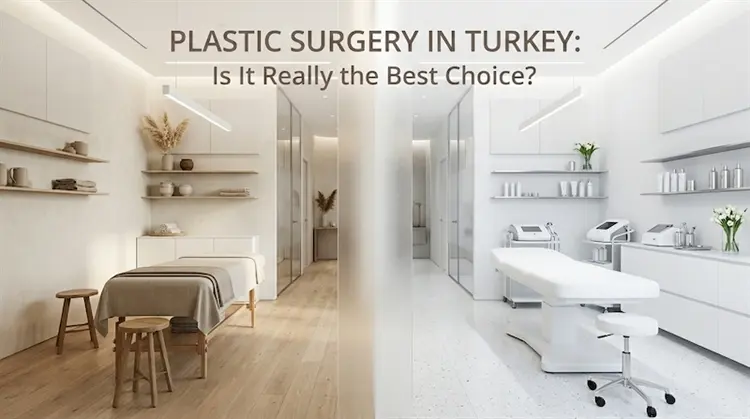
Plastic Surgery in Turkey: Is It Really the Best Choice?
Every year, hundreds of thousands of people fly to Turkey for cosmetic procedures. The numbers alone tell a story-but they don’t tell the whole story. If you’re considering a plastic surgery clinic in Turkey, you’ve probably already seen the before-and-after galleries, the package deals, and the glowing testimonials. What you might not have seen is an honest breakdown of what actually makes Turkey a strong option, where the real risks sit, and how to tell a world-class clinic from one that’s cutting corners.
That’s what this article is for.
Why Turkey Became a Global Hub for Plastic Surgery
Turkey didn’t become a medical tourism powerhouse by accident. The country has invested heavily in private healthcare infrastructure over the past two decades. Istanbul alone has more JCI-accredited hospitals than most European capitals. Combine that with a favorable exchange rate, a large pool of surgeons trained both domestically and internationally, and a government that actively supports health tourism-and you get a market that’s genuinely competitive on quality, not just price.
The most commonly sought procedures at any plastic surgery clinic in Istanbul include rhinoplasty, breast augmentation, liposuction, tummy tucks, and facelifts. Rhinoplasty, in particular, is something Turkish surgeons have built an outsized reputation for. Some of the busiest rhinoplasty surgeons in the world practice in Istanbul, performing several procedures a day. That volume translates into experience-though it also raises questions worth asking, which we’ll get to.
The Cost Factor: What You’re Actually Saving
Let’s talk numbers, because that’s usually what gets people’s attention first. A rhinoplasty at a reputable plastic surgery clinic in Turkey typically costs between $2,500 and $5,000. The same procedure in the UK runs $6,000–$10,000. In the US, you’re looking at $8,000–$15,000. Breast augmentation follows a similar pattern: roughly $3,000–$5,000 in Turkey versus $6,000–$12,000 in Western Europe or North America.
These aren’t bait-and-switch figures. The cost difference is structural. Lower labor costs, lower overhead, and a weaker currency relative to the dollar and euro all play a role. Turkish clinics aren’t necessarily using cheaper implants or inferior equipment-many use the same brands and devices you’d find in a top London or New York practice.
That said, the cheapest option is almost never the best option. If a quote seems dramatically lower than the market average, ask yourself what’s being left out. Anesthesia fees? Post-op garments? Follow-up visits? A trustworthy clinic will give you an all-inclusive breakdown upfront without you having to chase it.
How to Evaluate a Plastic Surgery Clinic in Istanbul
This is the part most articles gloss over, and it’s arguably the most important. Here’s what actually matters when choosing a clinic:
Surgeon credentials. Look for board certification from the Turkish Board of Plastic Surgery or equivalent international boards. Many top surgeons in Istanbul also hold memberships in ISAPS (International Society of Aesthetic Plastic Surgery) or EBOPRAS (European Board of Plastic, Reconstructive and Aesthetic Surgery). These aren’t just letters after a name-they indicate peer-reviewed standards.
Hospital vs. clinic setting. Some procedures are performed in standalone clinics, others in full-service hospitals. For anything involving general anesthesia-abdominoplasty, breast surgery, combined procedures-a hospital setting with a proper ICU on standby is the safer choice. Ask where your procedure will be performed and what emergency protocols are in place.
Consultation depth. A good surgeon will spend time understanding your goals and managing your expectations. If a clinic is rushing you toward a booking without a thorough consultation-whether in person or via a detailed video call-that’s a red flag. The best plastic surgery clinics in Turkey treat the consultation as a diagnostic process, not a sales pitch.
Transparent before-and-after portfolios. Ask for photos of patients with similar anatomy and goals to yours. Consistency across results matters more than a handful of stunning transformations. You want to see a surgeon’s average outcome, not their personal best.
Patient coordinators and language support. Most reputable clinics assign English-speaking coordinators who manage logistics from airport pickup to follow-up appointments. This isn’t a luxury-it’s operationally important, especially if complications arise and clear communication is essential.
Plastic Surgery in Istanbul: What the Experience Looks Like
For international patients, the typical process follows a well-established pattern. You’ll have an initial remote consultation-usually over video or a messaging platform-followed by a trip to Istanbul that lasts anywhere from five days to two weeks depending on the procedure.
Most clinics that cater to international patients offer packages that bundle the surgery, hotel accommodation, transfers, and post-op checkups. It’s convenient, but read the fine print. Understand what happens if you need an extra night, an additional follow-up, or-worst case-a revision.
Recovery logistics deserve serious thought. After a rhinoplasty, flying home within a week is generally feasible. After a tummy tuck or body contouring, you’ll want at least ten days before a long flight. Plan your trip around the recovery timeline, not the other way around.
One thing that catches people off guard: the post-op period in Istanbul can feel isolating if you’re traveling alone. Bringing a companion isn’t just emotionally helpful-it’s practically useful. Someone needs to help you get back to the hotel, manage medications, and communicate with staff if needed.
Addressing the Risks Honestly
No article about plastik surgery in Turkey would be complete without talking about risk. Here’s the reality:
Complications happen everywhere. Infection, scarring, asymmetry, and dissatisfaction with results are not unique to Turkish clinics. They happen in Beverly Hills and Harley Street too. What matters is how a clinic handles complications when they arise.
Follow-up care across borders is tricky. If something goes wrong three weeks after you’ve flown home, you can’t just pop in for a checkup. Before committing, ask your clinic how they handle remote follow-up. Do they offer virtual consultations? Will they cover the cost of corrective procedures? Can they refer you to a partner clinic in your home country? These are non-negotiable questions.
Not every clinic is equal. Turkey’s medical tourism boom has created a wide spectrum of quality. There are internationally recognized surgeons producing exceptional work, and there are underqualified practitioners operating in substandard facilities. The gap between the top and bottom of the market is wider than in many Western countries, precisely because the sector has grown so fast. Due diligence isn’t optional-it’s essential.
Regulation exists but varies in enforcement. Turkey’s Ministry of Health regulates cosmetic surgery, and accreditation bodies like JCI provide external oversight. But enforcement can be inconsistent, particularly with smaller clinics outside major cities. Sticking with accredited facilities in Istanbul or Ankara significantly reduces your risk.
Who Should-and Shouldn’t-Consider Turkey
Turkey makes strong sense if you’re looking for a well-credentialed surgeon, you’re comfortable traveling for medical care, and you’re willing to invest time in research. The savings are real, and the quality at the top end is genuinely competitive with anywhere in the world.
It makes less sense if you want the convenience of local follow-up care, if you’re uncomfortable navigating a foreign healthcare system, or if you’re choosing primarily on price without vetting the clinic thoroughly. Bargain hunting in cosmetic surgery is a bad idea regardless of geography.
It’s also worth noting that some procedures carry higher travel-related risks than others. Anything involving significant body contouring or multiple combined procedures demands a longer recovery window and closer post-op monitoring. If your surgeon at home recommends staging procedures over two sessions, a surgeon abroad who promises to do everything in one visit should give you pause.
The Bottom Line
Choosing a plastic surgery clinic in Turkey can be an excellent decision-if you approach it the same way you’d approach any major medical decision. Research the surgeon, not just the price. Verify credentials independently. Ask hard questions about complications and follow-up. Plan your recovery conservatively.
Turkey’s best clinics and surgeons genuinely stand among the world’s finest. But “Turkey” isn’t a monolith. The difference between a great experience and a regrettable one almost always comes down to the homework you do before you book.
Take your time. Ask for references. Trust your instincts when something feels off. And if a deal looks too good to be true-in Istanbul or anywhere else-it probably is.